Managing Human Factors & Cyber Risks Across Connected Vessels
ABS specialists John Jorgensen and Kevin McSweeney examine how naval system architecture and human-centered procedures mitigate marine IT/OT risks.
As ships adopt tighter integration between onboard automation, navigation networks, and shore connectivity, bridging IT (Information Technology) and OT (Operational Technology) introduces cyber exposure alongside operational efficiency gains.
Marine insurance analyses consistently show that human factors and procedural gaps — from removable media to misconfigured interconnects — contribute to the majority of digital incidents afloat.
Engineering & Human-System Lifecycle Integration
As control architectures grow more complex, minimizing human error requires conscious engineering choices early in the design phase: clean air-gapping of critical machinery buses, locking exposed ports, network segmentation, and intuitive bridge human-machine interfaces (HMI).
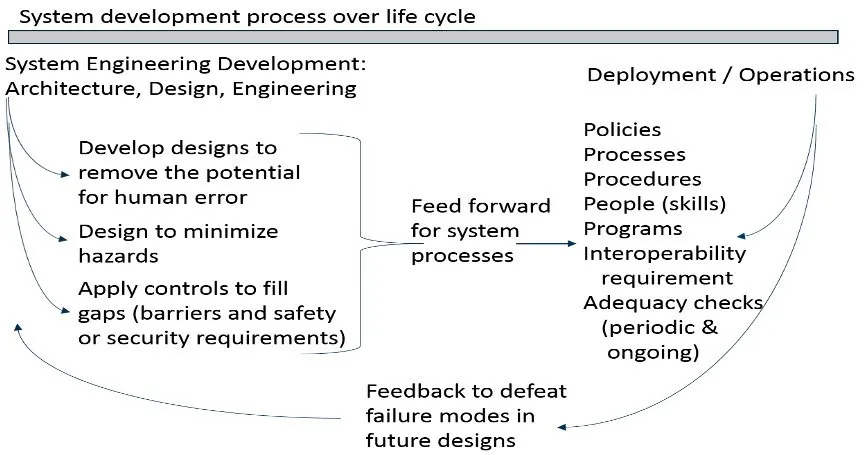
On the left side of the vessel lifecycle, naval system design defines resilient barriers against single-point failures and security breaches. On the right side, accurate as-built architecture schematics, documented test procedures, and crew cyber awareness drills sustain safety across years of service.
Adapted from insights by John Jorgensen and Kevin McSweeney (ABS), published via The Maritime Executive.